Honeybee and Honey FAQ
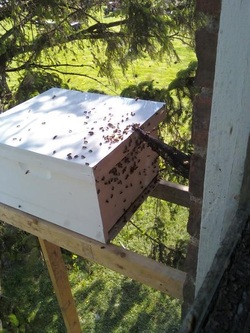
Whether you're just seeking information or need physical assistance, we hope we can help!
These pages seek to provide a variety of information. Click the links below or see the pop-out menu at the side.
Help! I have a swarm!
Honeybee Terms Wordlist
These pages seek to provide a variety of information. Click the links below or see the pop-out menu at the side.
Help! I have a swarm!
Honeybee Terms Wordlist
Honeybee Trivia from the National Honey Board
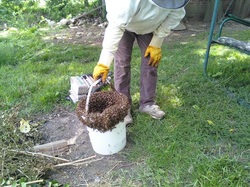
Captured swarm at Mulberry Creek CSA
We are pleased to present a whole bunch of trivia in regard to honey! You can truly amaze your teachers, friends, and co-workers with these important facts.
How many flowers must honey bees tap to make one pound of honey?
About two million flowers, give or take.
How far does a hive of bees fly to bring you one pound of honey?
More than 55,000 miles.
How much honey does the average worker honey bee make in her lifetime?
About 1/12 of a teaspoon.
How fast does a honey bee fly?
About 15 miles per hour.
How much honey would it take to fuel a bee’s flight around the world?
About one ounce (or two Tablespoons); no carry-on luggage is allowed!
What is mead?
Mead is wine made from honey.
How many sides does each honeycomb cell have?
Each cell is a six-sided hexagon.
What is the U.S. per capita consumption of honey?
On average, each person consumes about 1.3 pounds per year.
What state is known as the beehive state?
Utah.
How many wings does a honey bee have?
Each honey bee has four wings.
How many beekeepers are there in the United States?
USDA has estimated that there are between 139,600 and 212,000 beekeepers in the United States. Most are hobbyists with less than 25 hives.
How many honey-producing colonies of bees are there in the United States?
The USDA estimates that there are approximately 2.68 million honey producing colonies in the United States. This estimate is based on beekeepers who managed five or more colonies in 2010.
How many flowers does a honey bee visit during one collection trip?
A worker bee visits about 50-100 flowers during each trip.
How do honey bees "communicate" with one another?
They communicate by "dancing." Honey bees do a dance which alerts other bees where nectar and pollen are located. The dance explains direction and distance. Bees also communicate with pheromones, a unique odor common to the particular beehive.
What does "super" mean to a beekeeper?
Supers are the hive boxes in which honey is stored, usually placed above the deeper box called the "hive body", where brood is reared.
How many flowers must honey bees tap to make one pound of honey?
About two million flowers, give or take.
How far does a hive of bees fly to bring you one pound of honey?
More than 55,000 miles.
How much honey does the average worker honey bee make in her lifetime?
About 1/12 of a teaspoon.
How fast does a honey bee fly?
About 15 miles per hour.
How much honey would it take to fuel a bee’s flight around the world?
About one ounce (or two Tablespoons); no carry-on luggage is allowed!
What is mead?
Mead is wine made from honey.
How many sides does each honeycomb cell have?
Each cell is a six-sided hexagon.
What is the U.S. per capita consumption of honey?
On average, each person consumes about 1.3 pounds per year.
What state is known as the beehive state?
Utah.
How many wings does a honey bee have?
Each honey bee has four wings.
How many beekeepers are there in the United States?
USDA has estimated that there are between 139,600 and 212,000 beekeepers in the United States. Most are hobbyists with less than 25 hives.
How many honey-producing colonies of bees are there in the United States?
The USDA estimates that there are approximately 2.68 million honey producing colonies in the United States. This estimate is based on beekeepers who managed five or more colonies in 2010.
How many flowers does a honey bee visit during one collection trip?
A worker bee visits about 50-100 flowers during each trip.
How do honey bees "communicate" with one another?
They communicate by "dancing." Honey bees do a dance which alerts other bees where nectar and pollen are located. The dance explains direction and distance. Bees also communicate with pheromones, a unique odor common to the particular beehive.
What does "super" mean to a beekeeper?
Supers are the hive boxes in which honey is stored, usually placed above the deeper box called the "hive body", where brood is reared.